
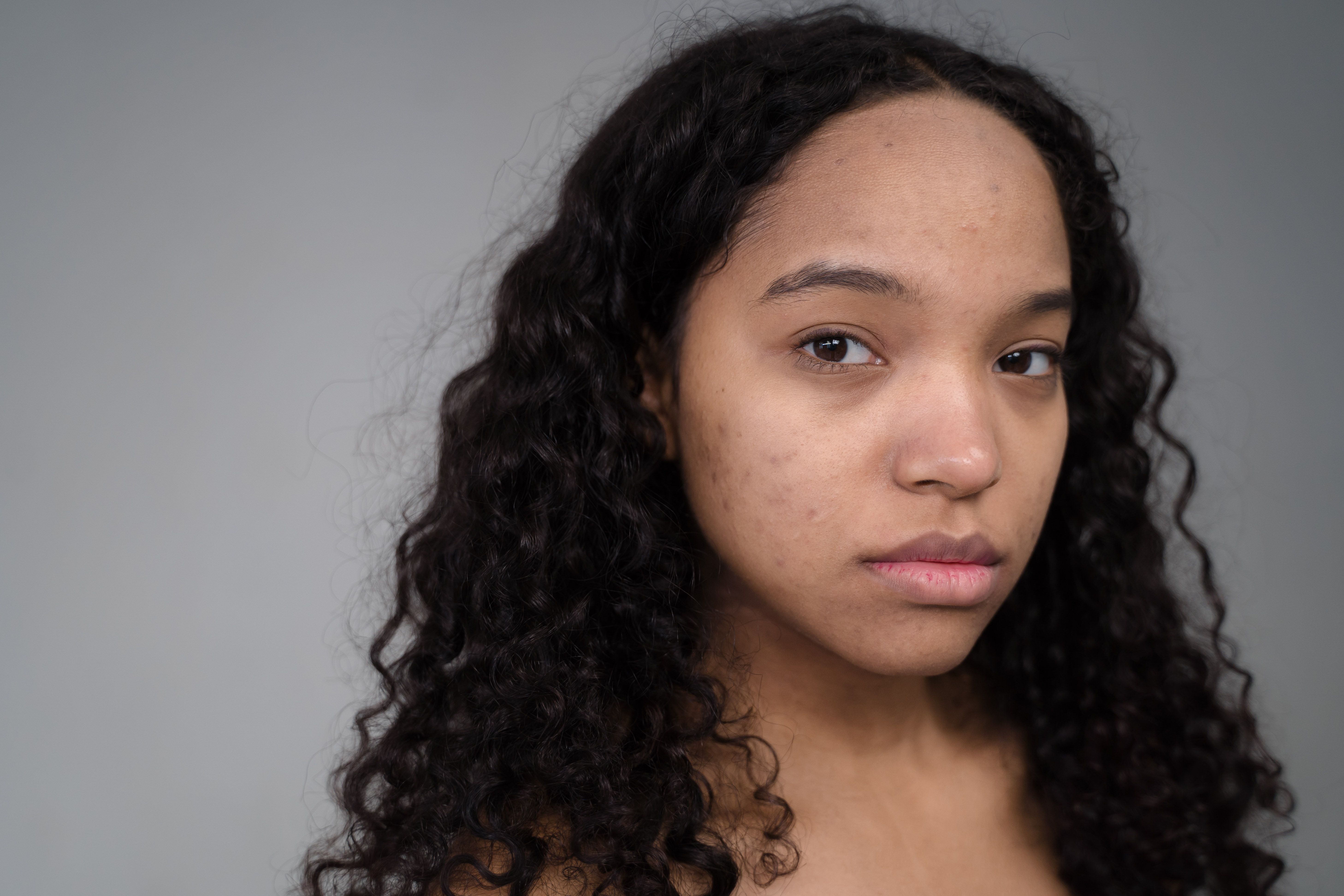
If you have spent any real amount of time researching this, you have probably noticed that the internet cannot quite agree with itself.
Brand websites will tell you airbrush makeup covers acne scars beautifully, almost effortlessly. Then you end up three pages deep in a wedding forum reading a comment from someone with cystic acne scarring saying airbrush was the worst decision she made for her photos.
Annoyingly, both can be true.
That is the part that gets left out. Airbrush is not automatically good or bad for acne scars. It depends on the kind of scarring, the condition of the skin that day, the products underneath it, and, honestly, whether the person applying it knows what they are doing.
So. Let’s sort through that instead of pretending there is one clean answer.
Airbrush Is Not One-Size-Fits-All for Scarring
Here is the honest version.
Airbrush makeup can work beautifully on some types of acne scarring and look surprisingly bad on others. The difference usually comes down to depth and texture, not whether your skin is somehow “good” or “bad.”
Shallow, mostly flat post-acne marks usually respond well to airbrush. These are the marks that show up more as redness, brown spots, or uneven color than actual indentations. Airbrush can blur that kind of discoloration nicely because the mist goes on in thin, even layers without adding much weight.
For that kind of scarring, I actually think airbrush can be a very good option.
Deeper textural scarring is where things get complicated.
Ice-pick scars, boxcar scars, rolling scars, or any pitting you can feel under your fingers do not always cooperate with airbrush. Sometimes the finish looks smooth from a few feet away and then catches every shadow once direct light hits it. Bathroom lighting, flash photography, sunlight from the side. Brutal.
More than one person with cystic acne scarring has learned this the hard way. Airbrush can cling around the edges of deeper scars and make the texture look more obvious instead of less. Not every time, but often enough that I would never tell someone with pronounced pitting to rely on airbrush alone without trying it first. If the pitting runs deep, it might also be worth reading up on microneedling as a treatment option alongside makeup, not instead of it. Depressed scarring is exactly the category that responds to collagen remodeling, which is why microneedling is worth understanding as a treatment option before you decide makeup alone has to solve this.
Active cystic acne adds another layer.
If you are dealing with painful active breakouts on top of older scarring, the goal is not really “fill everything in and make it disappear.” That usually leads to too much product, irritation, and a finish that looks heavier as the day goes on. Active acne needs a gentler approach, and sometimes a dermatologist needs to be part of that conversation before makeup even enters it.
Not the answer people want, usually. Still true.
Why Airbrush Behaves This Way
The formula itself explains most of the disagreement.
Airbrush foundation is thin by design. It is sprayed in fine layers and meant to sit lightly across the skin rather than build up heavily in one place. That is what gives it the smooth, lightweight, photo-friendly finish people like.
It is also why it can struggle with depth.
A thin product can even out color, but it cannot remove the shadow created by an indentation. It goes over the top of the scar, while the dip in the skin is still there underneath. The color may match. The texture does not disappear.
And texture is mostly about light.
That is the piece people forget. A scar can be perfectly covered in terms of redness or pigment and still remain visible because light is catching the edges and casting a shadow inside it. No foundation, airbrush or otherwise, can completely flatten skin that is not flat.
Traditional foundation behaves differently because you can work product into one specific area with a brush, sponge, or fingertip. You can press more coverage where it is needed, sheer it out around the edges, then go back again. That control matters with pitted scarring.
Airbrush is less forgiving in that sense. It is elegant, but it is not especially surgical.
Prep Matters More Than the Formula
If there is one thing nearly everyone agrees on, it is that skin prep can make or break the result.
Honestly, I think prep matters more than whether the foundation comes out of an airbrush machine or a bottle.
Hydration is the first part. Dryness makes texture look sharper. It can also cause foundation to catch around the edges of scars, flake later in the day, or settle in a way that looks fine at first and then… does not.
Moisturizer is not optional if you are trying to soften visible texture.
That does not mean coating the skin in something greasy five minutes before makeup. Too much moisture can make the foundation slide. The skin needs to feel comfortable and flexible, not wet.
Primer is the next piece.
A good primer can create a more even surface for both traditional and airbrush foundation. For pitted scars, a texture-filling or smoothing primer can help soften the edges of the indentation before foundation goes on.
The important part is how it is applied. Rubbing it back and forth usually does less than people think. Pressing a small amount into the textured areas tends to work better. Give it a minute. Let it settle. Do not keep adding layer after layer because you are nervous.
That is usually when things start getting worse.
Color correction is probably the step people skip most often.
If the scars are red, purple, or dark brown, the foundation ends up doing too much work when there is no corrector underneath. Then more foundation gets added, then powder, then another layer because the redness is still showing through. Suddenly the texture is more visible even though the color is technically covered.
A small amount of the right corrector can take down the discoloration before foundation ever touches the skin. Green can help with redness. Peach or orange tones can help with darker discoloration depending on skin tone.
Small amount. Truly. Color corrector is not face paint.
Skincare and makeup prep are not really separate conversations here. Dryness, inflammation, and active breakouts all change how makeup sits. If the skin underneath is irritated or peeling, the foundation is going to show it. Airbrush does not override biology.
Would be nice if it did.
Makeup for Scarring Is Not Frivolous
I want to push back on the idea that caring about this is vain.
Visible acne scarring can affect how people feel in photographs, at work, on dates, at weddings, or just walking into a room without thinking about whether the light is hitting their face from the side.
That is not shallow. It is lived experience.
Research on corrective makeup for visible skin conditions has found that it can meaningfully improve quality of life. That makes sense to me. Makeup does not treat the scar itself, but it can give someone more control over when and how much they want it to be visible.
There is a strange tendency to tell people they should either fix their skin medically or simply accept it. As though using makeup in the meantime is somehow cheating.
It is not.
You can work on the skin and wear makeup. You can wear makeup without pursuing treatment. You can cover everything one day and nothing the next.
No moral lesson required.
So, Airbrush or Not?
If your scarring is mostly discoloration, redness, or shallow texture, airbrush is worth trying. It can give you even coverage without the heaviness of a full traditional base, and it often wears well once it is properly set.
If you have deeper pitting, pronounced texture, or active cystic acne, traditional foundation will usually give you more control. A smoothing primer, targeted color correction, and carefully layered foundation can often soften the overall appearance better than airbrush alone.
I would not say airbrush is impossible for deeper scars. I would say do not trust anyone who promises it will automatically blur them away.
Try it on your actual skin. Wear it in daylight. Take a flash photo. Turn your face toward a window and then away from it. That test tells you more than a hundred product descriptions.
The honest answer is that the formula matters less than brands want you to believe.
Prep matters more. Technique matters more. Lighting matters more than anyone likes to admit.
And there is no shame in needing any of it.
Frequently Asked Questions
Does airbrush makeup make acne scars look worse?
It can, especially with deeper pitted scarring. The thin, often matte finish may catch around the edges of scars without filling the indentation, which can make the texture more obvious under direct light.
For mostly flat discoloration or shallow scarring, airbrush usually performs much better.
What should I do before applying makeup over acne scars?
Start with hydrated, calm skin. Apply a smoothing or texture-filling primer where needed, then use a small amount of color corrector on redness or dark marks before foundation.
Let each layer settle before applying the next one. Rushing the prep is usually where the finish starts to look heavy.
Is it okay to wear makeup over acne scars?
Yes.
Makeup does not damage healed acne scars by default, and corrective makeup can help people feel more comfortable and confident while living with visible skin changes.
With active acne, use non-irritating products, remove makeup thoroughly, and avoid piling heavy layers over inflamed areas. The goal is coverage without making the skin angrier.
Sources
- Airbrush vs. Traditional Makeup for Acne Scarring (WeddingWire Community Forums)
- Best Makeup to Cover Acne Scars (WeddingWire Community Forums)
- Airbrush vs Traditional Makeup Application (Gals and Ghouls)
- Interest of Corrective Makeup in the Management of Patients in Dermatology (Clinical, Cosmetic and Investigational Dermatology, 2012)